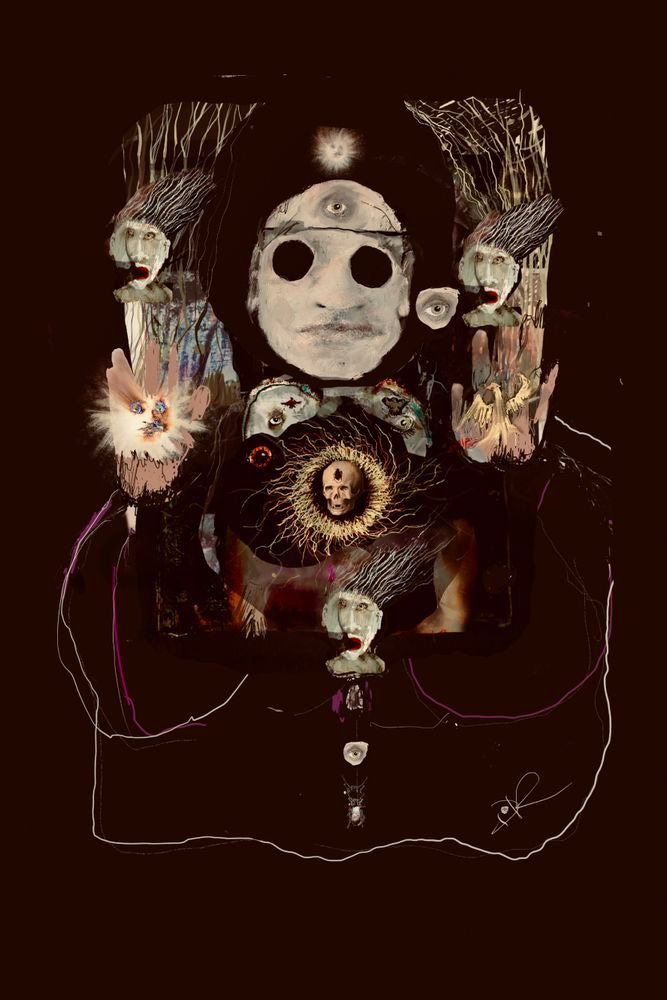
In The Seer, a central figure emerges from a dark field, surrounded by repeated faces, floating eyes, and raised hands carrying small bursts of imagery. An eye appears in the forehead while the eyes of the face itself are darkened, shifting vision away from ordinary sight and toward another kind of perception.
The composition feels part portrait, part apparition, and part ritual object. Repeated faces echo around the central form like fragments of identity or accompanying presences, while the radiant skull and eye at the chest suggest awareness of mortality, memory, and an inner life that remains active beneath the visible surface.
Rather than explaining exactly what is being seen, The Seer leaves the act of seeing unresolved. The figure seems simultaneously observer and observed, receiving images as much as creating them. The work inhabits that uncertain space where intuition, imagination, memory, and spiritual perception begin to merge.