Disturbing Times
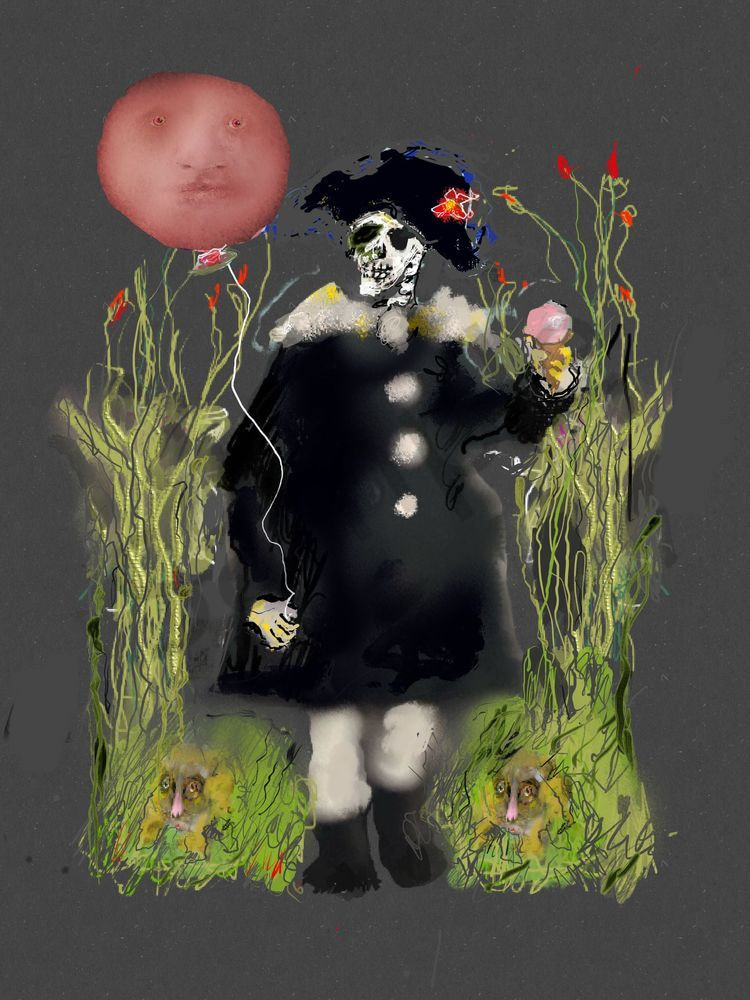
Disturbing Times presents a small skeletal child standing in a field of tall green growth, holding an ice cream cone in one hand and a pink balloon in the other. That combination is what gives the image its bite. The figure carries the ordinary signs of childhood — a treat, a balloon, a moment that should feel playful — yet the child itself is reduced to bone. The result is not simply eerie. It is emotionally conflicted, with innocence and mortality occupying the same body.
The skeletal figure stands frontally, dressed in dark clothing that gives it a formal, almost doll-like presence. The black dress and hat-like shape add a faintly old-fashioned air, making the child feel at once theatrical, vulnerable, and strangely timeless. The white bones visible within the face and hands intensify the tension. This is not a living child in any ordinary sense, yet it still participates in the familiar world of small pleasures. That contradiction is central to the work’s power.
The ice cream cone becomes especially poignant in this context. Normally it would read as carefree, sweet, and fleeting. Here it still carries those associations, but it also feels fragile and absurdly temporary — a small comfort held by a figure that already embodies death. The image does not turn that detail into a joke. Instead, it sharpens the emotional tone, making the pleasure feel tender, exposed, and haunted.
The pink balloon, attached to a string in the child’s right hand, hovers beside the figure like a soft moon or companion presence. Its roundness and gentle color create a visual counterweight to the starkness of the skeleton. At the same time, because it resembles a small moon, it begins to take on a more symbolic role. It feels less like a party object than a private orbiting world — dreamlike, detached, and faintly ominous. The child appears tethered to it, as if carrying a sign of wonder through a landscape touched by death.
The surrounding field of grasses and flowering forms adds another layer of instability. The greenery suggests life persisting all around the figure, but it is not presented as simple comfort. It rises densely on either side, framing the child in a world that feels overgrown, watchful, and slightly alien. Nature continues. Growth continues. But the child at the center reminds us that life is inseparable from loss and decay.
The title Disturbing Times grounds the image in a broader emotional condition. This is not just a surreal child portrait. It feels like a statement about living through a period when the ordinary has been invaded by darker awareness. Childhood symbols remain intact, but they no longer feel innocent. The skeleton does not cancel the tenderness of the image — it complicates it. It forces the viewer to hold delight and dread at once.
What makes the piece compelling is that it refuses melodrama. The skeletal child does not appear monstrous. It simply stands there, holding an ice cream cone and a moon-like balloon, as if this strange condition were now normal. That calmness makes the image more unsettling. Disturbing Times becomes a portrait of innocence after illusion has been stripped away — fragile, haunted, and still oddly capable of wonder.